
HabitAdd takes part in Space Business Forum 2026
On 6 November 2026, our team took part in the forum at Sofia Tech Park as a member of the Bulgarian Space Cluster.
Bulgarian technology for satellites and lunar missions
The first Space Business Forum brought together around 120 participants in the John Atanasoff Hall. The Bulgarian Space Cluster organised the event with the Ministry of Innovation and Digital Transformation as its institutional partner. The programme covered the technology behind satellite missions, how companies fund its development and how engineers train for work in the sector.
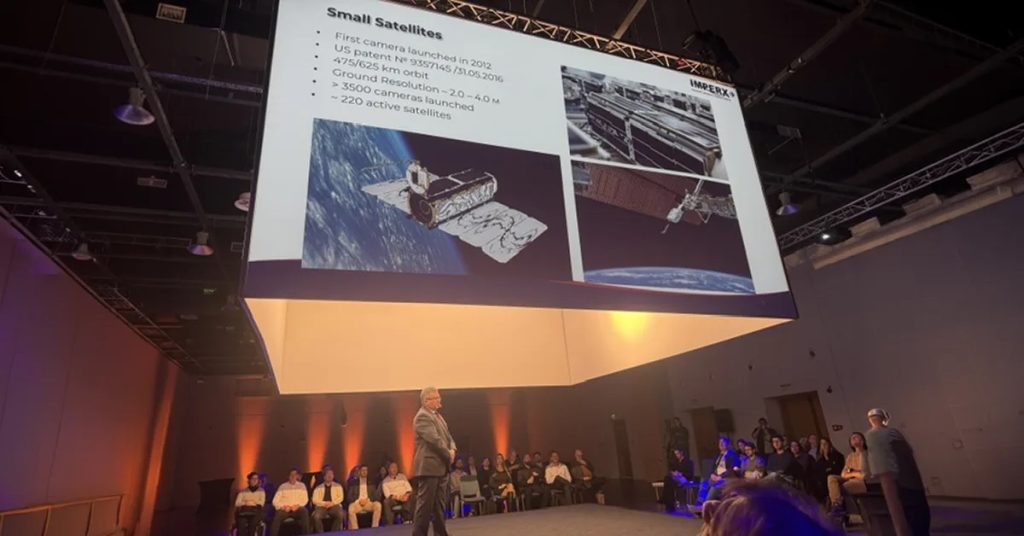
Dr Petko Dinev, founder and CEO of IMPERX, presented Bulgaria’s contribution to the Artemis programme. IMPERX cameras flew on Artemis I and Artemis II. On the second mission, the company’s cameras recorded the launch and the separation of the rocket’s boosters. It was a concrete example of the role specialist components play in a space mission.
The other keynote in this session came from Dr Victor Danchev, CTO of EnduroSat, on the development of the commercial space sector in Bulgaria. EnduroSat’s modular platforms illustrate how a common satellite design can accommodate different payloads depending on the mission.
Funding and skills for the space sector
Wiser Technology co-founder Dimitar Dimitrov moderated the funding panel. The programme listed investors from Early Game Ventures and Neo Ventures for a discussion on sources of capital for space and deep-tech companies. The programme set aside seven slots for cluster members to present work in areas including engineering simulation, ground stations, satellite data, software and food for space missions.
A separate panel focused on education and the skills people need to work in the sector. It formed part of the session on the future of the space industry in the EU, which also included a presentation on the space economy by Veronica La Regina.
How HabitAdd supports prototyping and testing
Early in development, we can design and make a prototype so a team can check whether an enclosure fits, cables can be routed and connectors remain accessible after assembly. Industrial 3D printing can also be used for ground equipment housings and fixtures that hold parts in position during tests.
When the project starts with an existing part, we use 3D scanning and reverse engineering to create a digital model. For a prototype enquiry, a CAD file or drawing, the dimensions that need checking and the part’s operating conditions help us recommend a material and a process for the job.
Discuss your project with HabitAdd